A Professional’s Review of the ManekiNeko Good Luck Cat Embroidery Design
From my perspective as an embroidery designer working primarily with small business clients, the ManekiNeko Good Luck Cat immediately presents itself as a design loaded with positive brand potential. Its subject—the widely recognized symbol of luck and prosperity—carries an inherent warmth and welcoming energy that translates perfectly into merchandise meant to connect with customers.
First Impression: A Blend of Playful Charm and Professional Polish
When evaluating a machine embroidery design for business use, its visual personality is paramount. The ManekiNeko Good Luck Cat strikes a compelling balance. It leans naturally towards playful and friendly, which is ideal for businesses wanting to soften their corporate image or convey a handmade, personal touch. Yet, the classic, iconic nature of the motif also lends a sense of traditional elegance and cultural depth. For a small café, boutique, or creative studio, this design doesn’t just look decorative; it looks intentional, like a considered part of the brand identity.
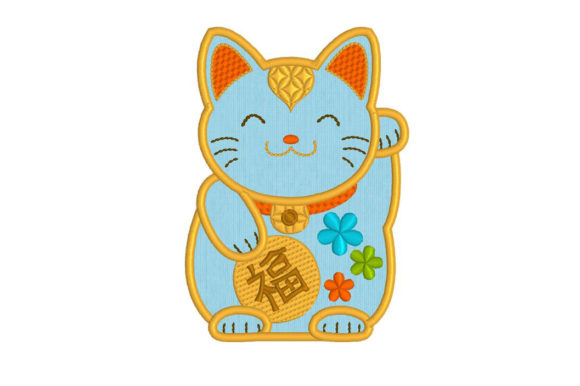
The description notes the cat comes in many colors. This is a significant advantage for branded merchandise. A bakery could use gold thread for a premium feel on aprons, a florist might choose a soft pastel for tote bags, and a pet brand could opt for bold, vibrant colors on staff caps. This flexibility makes it a versatile design asset.
Performance in Real Business Applications
Let’s move from impression to practical application. How does this embroidery file perform when stitched out for real small business merch?
Embroidered Patches and Product Labels
As a stand-alone embroidered patch, the ManekiNeko Good Luck Cat is excellent for low-commitment branding. A handmade shop could sew it onto product packaging as a lucky seal. A boutique could offer it as a customer gift or event merch pin. The symbolic meaning adds value beyond just a logo. For use on custom apparel like staff uniforms or work shirts, it works beautifully as a chest logo accent or a subtle sleeve detail. The raised paw is a clear, recognizable gesture even at smaller sizes.
Apparel and Accessory Embellishment
Apron embroidery is a classic use, and this design’s friendly aura is perfect for front-of-house staff in retail or food service. For cap embroidery, the rounded, central form of the cat is generally well-suited for the curved front of a cap, though careful testing at the intended size is crucial. On tote bags, it acts as a distinctive mark that suggests quality and thoughtfulness, elevating a simple bag into a branded handmade product.
In all these uses, the design serves not just as decoration but as a tool for customer recognition and visual consistency. Seeing the same lucky cat on a store apron, a tote bag, and a product label builds a cohesive, trustworthy brand story.
Considerations and Areas for Careful Use
No design is universally perfect, and professional application requires knowing its limits. With the ManekiNeko Good Luck Cat, certain applications demand pre-production testing.
- Small Patch Sizes: If the intention is to create very small patches for delicate items, you must check if it works at small patch size. Highly detailed outlines might simplify or disappear.
- Cap Fronts and Curved Surfaces: The design’s symmetry helps, but stitch density and registration on curved fabric texture like cap twill can be tricky. A test run is non-negotiable.
- Dark Uniforms: The described color variety is key. On dark fabrics, you’ll need to review thread color contrast carefully. A traditional white or gold cat would pop, but a darker color variant might get lost.
- High-Wash Items: For uniforms or aprons facing frequent laundering, a robust stabilizer choice and secure stitching are vital to maintain the design’s integrity and the business’s professionalism over time.
Impact on Brand Identity and Product Value
Choosing this design for your commercial embroidery projects isn’t just a production decision; it’s a branding one. The ManekiNeko Good Luck Cat inherently boosts buyer engagement through its positive symbolism. It can make a simple work shirt feel more special and a product seem more carefully crafted, directly increasing perceived product value. For an Etsy seller or craft business, it reinforces a handmade presentation with a touch of cultural storytelling.
However, it’s important to compare it beside other design assets in your brand toolkit. Does it complement your logo? Does it fit the overall aesthetic? It might be perfect as a secondary brand mark rather than the primary logo for many businesses.
Practical Designer Notes for Business Success
Before committing this design to production, here is my standard checklist for clients and fellow designers:
- Test in Black and White First: Stitch a simple monochrome version to evaluate the fundamental structure and clarity of the outlines.
- Review Thread Color Contrast: Plan your palette against your actual fabric colors—don’t rely on the digital embroidery file preview alone.
- Inspect Spacing: Ensure elements like the raised paw or facial details have enough stitch separation to be clear.
- Confirm Hoop Size: Match the design’s recommended size to the physical items you’ll embroider. This is critical for cap embroidery and patch production.
- Test on Real Fabric: Run a sample on the exact fabric of your final product—be it apron canvas, cap twill, or tote bag cotton.
- Use Proper Stabilizer: The right stabilizer foundation is half the battle for a clean, durable finished product.
- Create a Mockup for Client Approval: A printable mockup placed on a shirt or bag image helps visualize the final application and secure client approval.
- Confirm Commercial Licensing: Always verify that your purchase or acquisition of the ManekiNeko Good Luck Cat file includes a license for commercial embroidery and business use. Do not assume.
In summary, the ManekiNeko Good Luck Cat is a strong, emotive embroidery design with substantial utility for small business merchandise. Its charm can enhance brand warmth, and its iconic status can add perceived value. By applying it thoughtfully—respecting its technical requirements in smaller or challenging applications—it can become a beloved and effective part of your branded world, from the sleeve of a uniform to the corner of a product label, beckoning good fortune for your business and your customers alike.